If you’re like me, the algorithm figured out you were shedding before your mother did, and suddenly every scroll was pastel gummy vitamins, collagen tubs, and a woman flipping glossy hair over the words “hair, skin & nails.”
The postpartum hair supplement aisle is built on one true fact and a mountain of marketing stacked on top of it. The true fact: hair is genuinely expensive for your body to build, and a depleted body deprioritizes it. Growing a baby and feeding a baby are the two most depleting things a body does, so nutrition legitimately matters more right now than at most other points in your life.
The marketing mountain: therefore buy this specific $60 jar. That part does not follow. Here’s what actually matters, what’s mostly hype, and the one cheap blood test that beats every gummy ever sold.
What actually matters

Protein, boringly, first. Hair is made of protein (keratin), and it’s the first project your body cancels when protein runs short, because your body correctly ranks “hair” below “everything else.” Postpartum and nursing protein needs are higher than normal, and toast-and-coffee survival eating (no judgment, I lived there) runs a quiet deficit. You don’t need to count anything; you need protein present at each meal, whatever form is easiest: eggs, yogurt, beans, chicken, the cheese you eat standing at the fridge. This is the least glamorous advice on the internet and the most load-bearing.
Iron, the big postpartum one. Blood loss at delivery plus pregnancy’s demands leave a lot of us with low iron stores, and low ferritin (the storage form) is one of the best-documented nutritional drags on hair recovery. It can slow the regrowth after a normal shed, and in some women it drives extra shedding all by itself, mimicking or worsening everything else. The symptoms (tired, cold, foggy, pale) hide perfectly inside “has a baby.” This is a test-don’t-guess situation, and we’ll get to the test.
Vitamin D and zinc, the supporting cast. Both are involved in the follicle cycle, both are commonly low postpartum, and both are worth correcting when a test says they’re low, not megadosing on faith. More is not better with either; zinc in particular causes problems in excess.
Overall enough-ness. If you’re nursing, you’re running a small dairy operation on top of a construction project. Aggressive dieting to “get your body back” during the shedding window is one of the few ways to genuinely make hair worse, because a body in scarcity cancels the hair budget first. Recovery eating and hair recovery are the same project.
And the anticlimax: your regular postnatal vitamin covers the baseline. The one you already have. If you’re nursing, staying on it is standard advice anyway, and it contains sensible amounts of the things above. There is no secret additional hair vitamin sitting on top of it.
What’s mostly marketing
Biotin, the aisle’s main character. Actual biotin deficiency is rare, and in people who aren’t deficient, the evidence that extra biotin grows hair is thin to absent. It got its reputation from treating true deficiency and never gave it back. Meanwhile, here’s the part the gummy label never mentions: high-dose biotin interferes with common lab tests, including thyroid panels, and can make results read falsely normal or abnormal. Which is spectacular, because thyroid trouble is one of the real things we’re trying to rule out postpartum. If you take biotin and you’re getting blood work, tell your doctor and ask how long to pause it beforehand. A supplement that can mask the diagnosis of an actual cause of hair loss is not a hair supplement I can love.
Collagen. Cozy, pleasant in coffee, decent as a protein top-up, and carrying far more hair-specific promises than its evidence supports. Your body breaks it down into amino acids like any protein; it does not courier itself to your scalp. If you enjoy it, enjoy it as protein. If you’re buying it specifically to fix hair, cheaper protein does the same job.
“Hair, skin & nails” gummies. Mostly biotin (see above) plus a sprinkle of vitamins your postnatal already has, plus sugar, at a markup, in packaging designed for the exact 3 a.m. vulnerability this whole site exists to talk you out of. The kindest thing I can say is that they’re usually harmless. So is lighting the money on fire, and that’s at least warm.
The premium “hair recovery” formulas. Some big-name ones are genuinely well-marketed and even have brand-run studies; what they mostly are underneath is a multivitamin plus botanicals at a prestige price. Nothing in a jar overrides hormones on the shedding timeline, and nothing in a jar treats pattern thinning either. The jar is priced for your fear. We keep our money. House rules.
The one thing that beats every supplement: the test
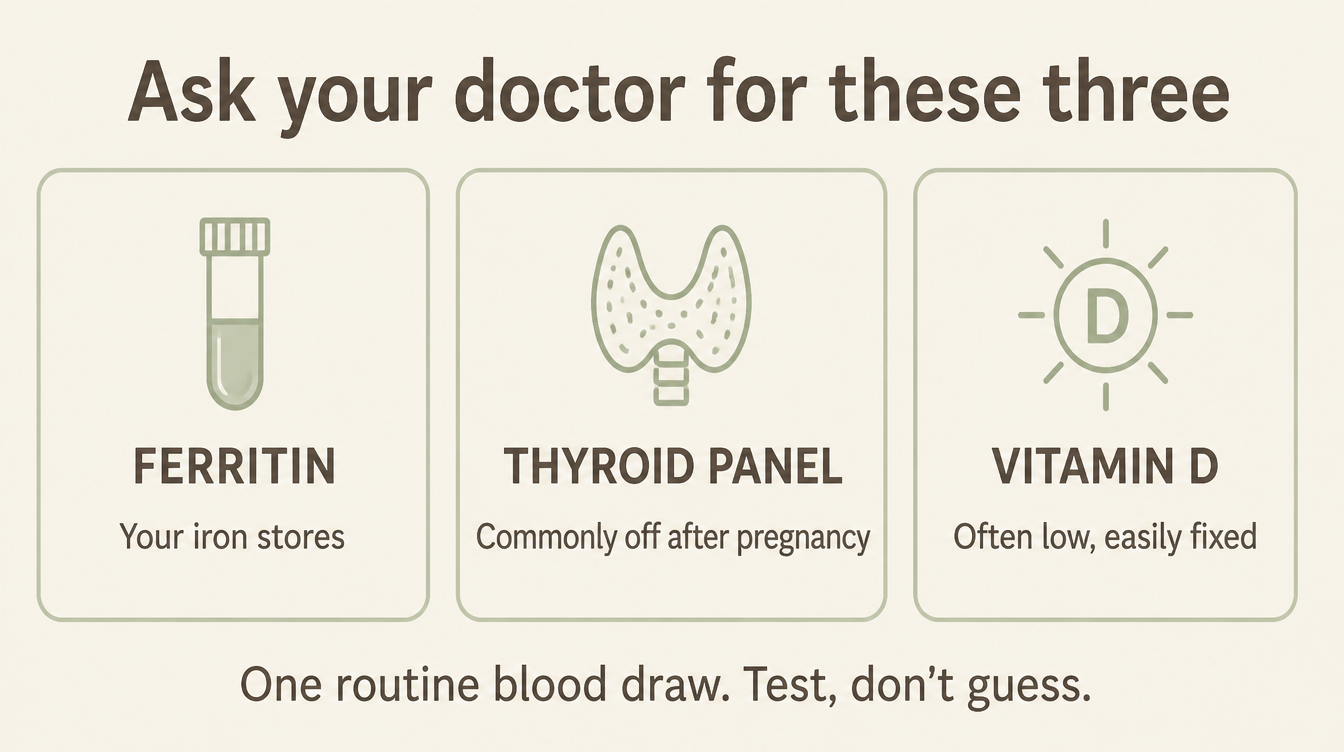
Instead of guessing which pill you need, find out. One standard blood draw, orderable by your OB or primary care doctor at any routine visit, answers the real questions: ferritin (iron stores), a thyroid panel (postpartum thyroiditis is common, underdiagnosed, and a genuine hair-loss cause all by itself), and vitamin D. It’s the same panel a dermatologist starts with for hair concerns, as covered in the derm guide.
Then supplement what’s actually low, at the dose your doctor suggests, and skip the rest. If something is low, congratulations, sincerely: you found a fixable contributor, and fixing it does more for your hair than the entire gummy aisle combined. If everything’s normal, better congratulations: you just saved hundreds of dollars a year, and your hair situation is explained by the ordinary shedding story resolving on its own schedule.
One safety note, because supplements read as harmless and aren’t automatically: if you’re nursing, run anything beyond your postnatal past your doctor, iron included, since the right dose depends on your actual levels and too much iron is its own problem.
The short version, one-handed edition
- Nutrition genuinely matters for hair recovery postpartum, and it’s covered by boring things: protein at every meal, adequate eating (especially while nursing), and your existing postnatal vitamin.
- Iron is the big one to check; low ferritin is a real, common, fixable drag on hair recovery. Thyroid and vitamin D round out the panel.
- Biotin is mostly hype and can scramble thyroid lab tests; pause it before blood work and tell your doctor.
- Collagen is fine as protein, not a hair treatment. Gummies and prestige formulas are priced for your fear.
- Test, don’t guess: one routine blood draw beats the entire supplement aisle.
Feed the person who’s rebuilding everything, check the two or three numbers that actually matter, and let the drugstore keep its pastel jars. You’re not a project to optimize. You’re a person recovering, and mostly succeeding at it, on toast.
You’re still in there. — Kelsey
Leave a Reply